How-To
Concrete Moisture Test Before Epoxy: Why Skipping It Causes Blisters
Moisture vapor under an old slab pushes coatings off from below. Here's how calcium chloride and meter tests work, what numbers mean, and when a moisture primer is required.
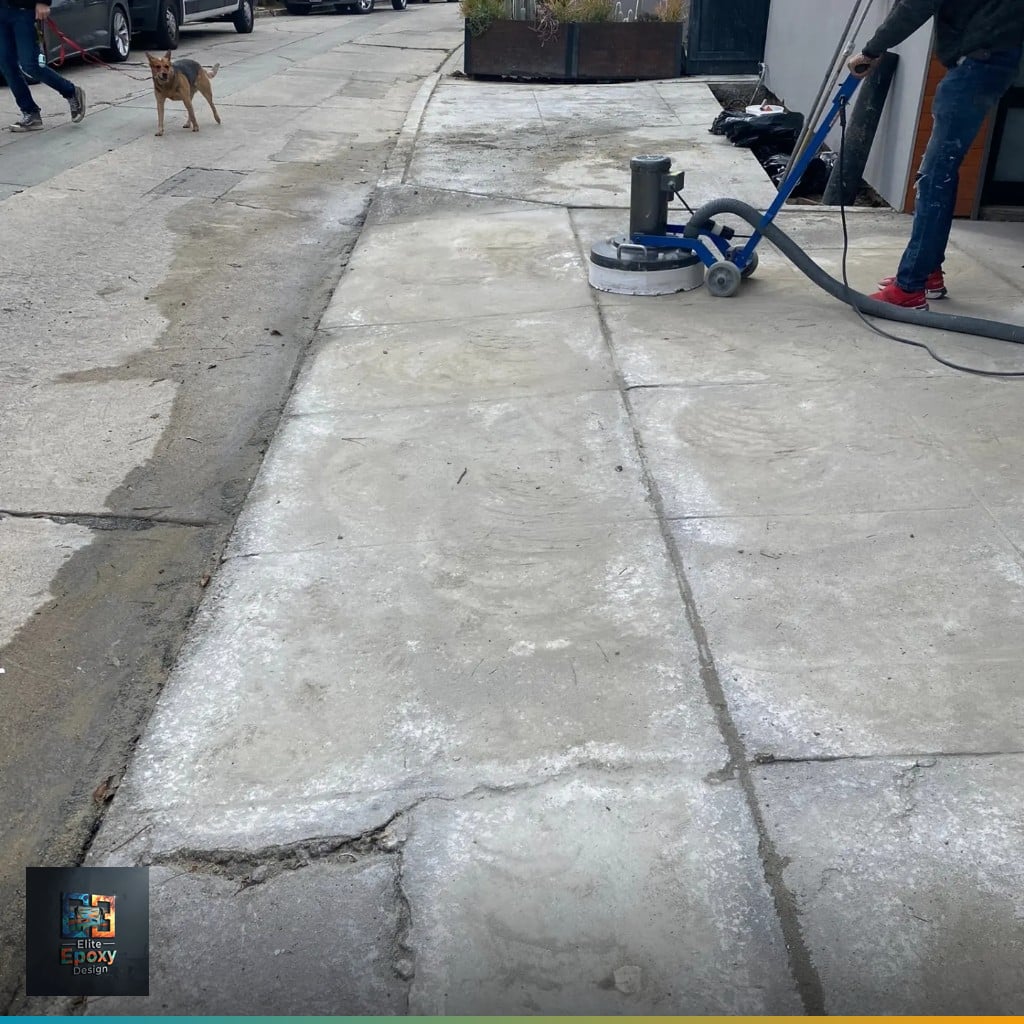
Moisture vapor transmission (MVT) is the silent peel. Water vapor moves up through concrete and pushes a film off from below. You see blisters, bubbles, or a patch that lifts for “no reason.” The reason was never tested.
Elite Epoxy Design moisture-tests slabs that need it — especially pre-1990 Metro Detroit garages and below-grade basements — before a warranty-backed quote.
Why old Michigan slabs are riskier
Many garages from the mid-century were poured without a plastic vapor barrier. Code caught up later. Groundwater still evaporates through pores. Coatings are a lid. If pressure is high, the lid comes off. Local pattern: garage floor coating in Metro Detroit.
What we measure
ASTM F1869 calcium chloride kits measure emission over 24 hours. Meters give a faster screen. If results sit above the system limit (often discussed around 3–4 lbs/1000 sq ft/24 hr for many films, product-specific), we add a moisture-mitigating primer or we walk away. Guessing is how you get a callback.
What moisture is not
It is not the same as a puddle on the floor. A “dry looking” slab can still emit vapor. It is also not solved by a fan overnight.
Prep still comes first
Testing does not replace grinding. Sequence: assess → test when indicated → grind and repair → coat. Full sequence: how to prep concrete for epoxy. Peel from skipped grind looks different from vapor blisters — peeling causes.
Basements and interiors
Below-grade slabs hold moisture. We do not treat a basement like a sunny garage. Different primer, different expectations, same honesty.
FAQ
Do I need a moisture test before epoxy?
On older slabs, slabs with no vapor barrier, basements, and any floor with a history of bubbles or peel — yes. We test before we quote a warranty-backed system.
What test do you use?
Calcium chloride (ASTM F1869) and/or a calibrated moisture meter, depending on the slab. The number has to fit the coating system, not a guess.
Can you just use a thicker primer instead of testing?
No. Primer is not a substitute for knowing vapor drive. High MVT needs a moisture-mitigating system or we do not coat.
Are blisters always moisture?
Often. They can also be contamination or coating over paint. We diagnose before we grind a second time.