Tips & Advice
How Long Does Epoxy Flooring Last? Realistic Lifespans by System
DIY epoxy often lasts 3–5 years in a daily garage. Professional polyaspartic flake systems commonly run 10–20 years when the slab is ground and moisture-tested. Here's what actually changes the number.
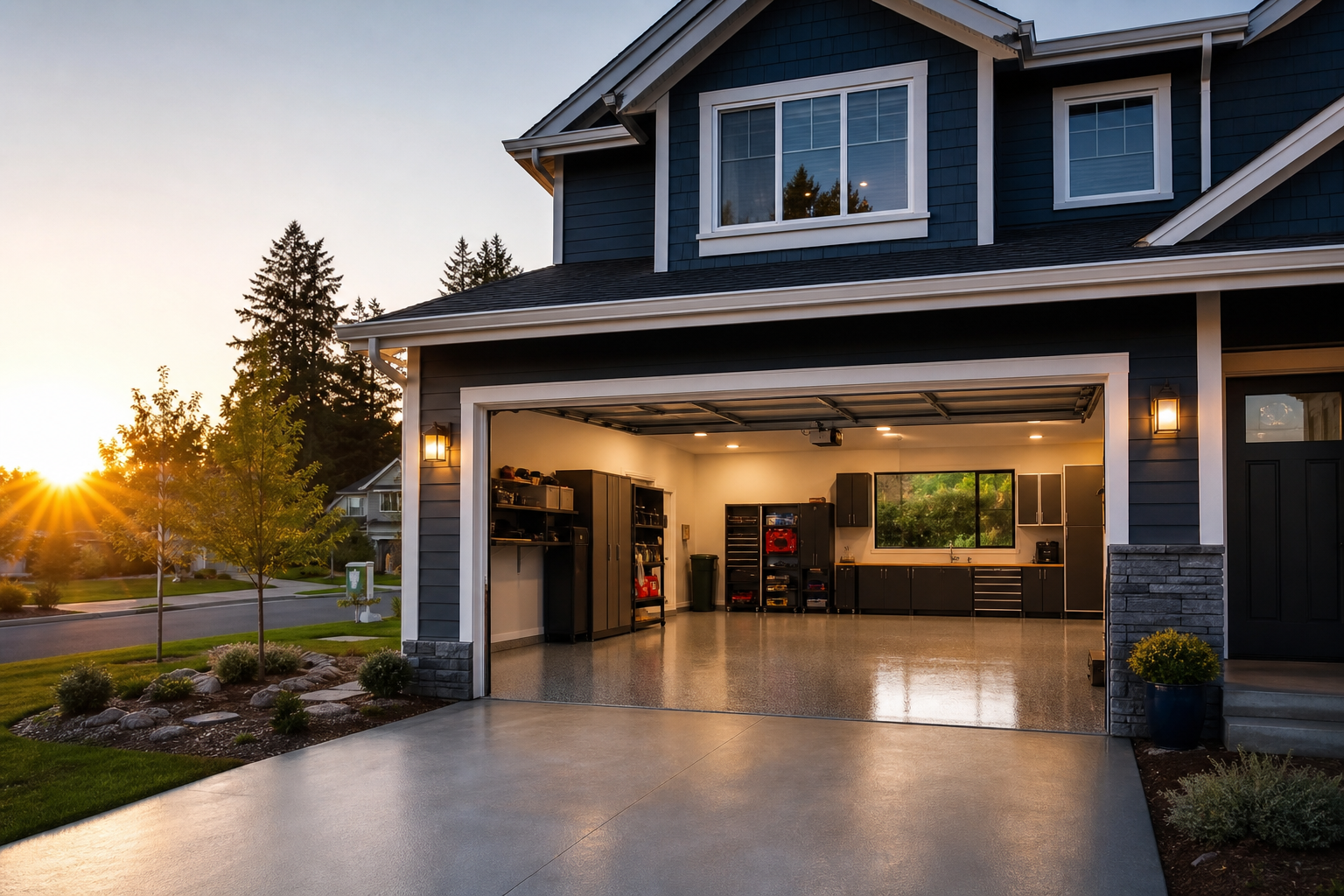
DIY kit epoxy in a daily garage: often 3–5 years. Professional polyaspartic flake on a ground, moisture-tested slab: commonly 10–20 years. Those numbers assume Michigan weather, hot tires, and salt — not a climate-controlled showroom.
Lifespan is prep plus chemistry plus use. Marketing “lifetime” stickers do not grind the floor.
Realistic ranges
| System | Typical service life | Notes |
|---|---|---|
| Big-box epoxy kit | 3–5 years | UV yellowing, brittle, thin |
| Professional epoxy (interior, no UV) | 5–7 years | Basements can do better |
| Polyurea base + polyaspartic top | 10–15+ years | Common pro stack |
| Polyaspartic flake (residential garage) | 10–20 years | If grind + moisture are honest |
| Quartz commercial | 10–20 years | Depends on wheels and chemicals |
Compare films in polyaspartic vs epoxy vs polyurea.
What cuts the number in half
- No diamond grind — see how to prep concrete
- Moisture vapor under an old slab
- Hot tire pickup on a weak film — peeling causes
- Sun through the door on non-UV-stable epoxy
- Forklifts on a decorative garage spec — warehouse flooring
Maintenance that actually helps
Mop salt. Do not park leaking pans on a week-old floor. Pads under jack stands. Recoat is a conversation when the film is still bonded, not when it is a bag of chips.
Cost vs years
A cheap redo every four years costs more than one correct garage install. Run the calculator, then get an on-site number.
FAQ
How long does a professional garage epoxy floor last?
A properly prepped polyaspartic flake system in a daily-driver garage is commonly a 10–20 year floor. Thin DIY epoxy is often 3–5 years in the same room.
Does metallic last as long as flake?
The topcoat and prep decide lifespan. Metallic shows wear sooner visually because there is no chip pattern to hide scratches.
What shortens the life the most?
Skipped grinding, high moisture, hot-tire peel, and UV on non-aliphatic epoxy. Michigan salt on a failed film is a symptom, not the root.
Can you recoat instead of full removal?
Only if the existing film is bonded. We test adhesion. Failed coating comes off before a warranty-backed redo.