Local Guide
Epoxy Floors in a Michigan Winter: Road Salt, Freeze-Thaw, and What Actually Holds
Michigan road salt and freeze-thaw destroy thin garage epoxy. Here's how a polyaspartic system handles brine, hot tires, and slab movement — and what fails by March.
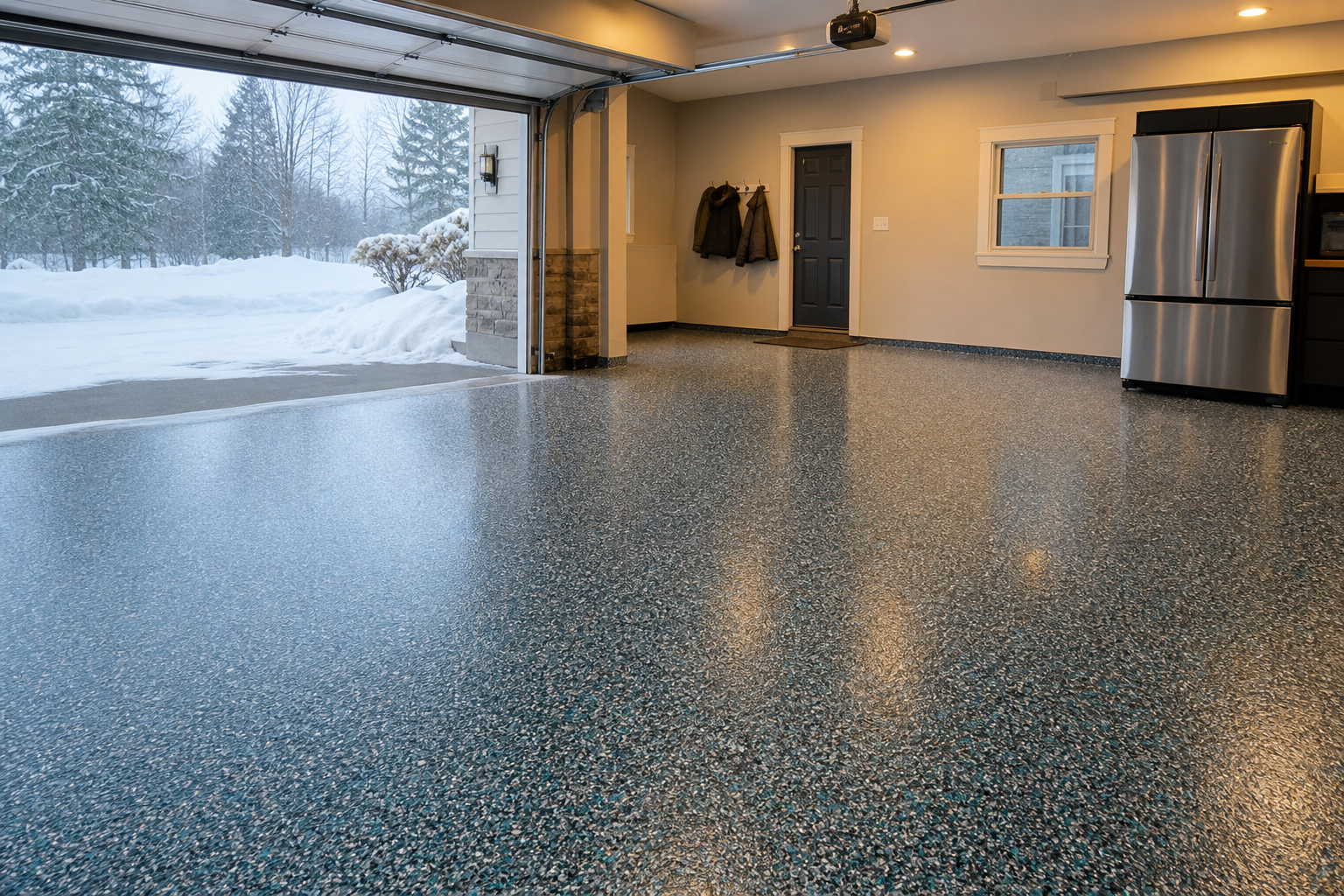
Michigan winters do two things to a garage slab: salt brine and movement. Thin DIY epoxy is brittle. It yellows in sun and lets chloride sit in pores. A polyaspartic flake system on a diamond-ground floor keeps salt on the surface so you can mop it.
If your last coating failed in March, it was probably prep, not “Michigan weather is impossible.” Read why garage floors peel and the local guide to Metro Detroit garage coating.
What salt actually does
Sodium chloride plus meltwater is a chemical attack. On bare concrete it drives spalling. On a poorly bonded film it finds an edge and lifts. On a sealed polyaspartic floor it is a sticky film you rinse. That is the whole point of coating a daily-driver garage here.
Freeze-thaw wants a film that flexes
Overnight 20°F, afternoon 45°F — the slab moves. Rigid epoxy fights it. Polyaspartic and polyurea-family films move with the concrete. That is why we spec those systems for residential Michigan garages instead of a box-store kit. Chemistry comparison: polyaspartic vs epoxy vs polyurea.
Winter install is possible. Frozen slabs are not.
We can coat in cold months when slab temp and dew point are in spec. We cannot coat ice, standing melt, or a floor that is actively leaching. If your garage is a pond every thaw, fix drainage first.
What to do after a snowstorm
- Break piles so melt is not a lake against the door
- Squeegee or mop brine off the coating
- Do not attack a fresh floor with aggressive degreasers in the first few days
A coated floor is easier to keep clean than raw concrete. It is not self-cleaning.
Driveways are a different spec
Garage interiors are one job. Exterior driveways and walkways take UV, plows, and open freeze-thaw. Ask for the outdoor system, not a garage film stretched into the weather. More in epoxy driveway coating in Michigan.
FAQ
Will road salt ruin epoxy garage floors?
Salt ruins bare concrete and cheap thin films. A ground slab with a chemical-resistant polyaspartic topcoat keeps brine on the surface so you can mop it instead of soaking the slab.
Can you install garage coating in winter in Michigan?
Polyaspartic has a wide temperature window compared with standard epoxy. We still verify slab temperature and dew point. We do not coat a frozen, wet slab.
Why did last year's coating peel after winter?
Usually prep or moisture, not “salt ate the product.” Hot tires plus a film sitting on dust is the classic spring peel.
Do I still need to shovel meltwater?
Yes. A coating is a barrier, not a drain. Push water out and wash brine so it is not sitting for weeks.